Professional beauty spaces are changing, but the most useful equipment is not always the newest. A treatment room may soon pair a quiet adjustable bed with connected devices, clear digital controls, and simple service records. These details affect daily work. They can shape setup time, client comfort, and how reliably staff follow treatment protocols.
So, what is the future of professional beauty equipment? It will likely involve smarter interfaces, more adaptable designs, and tools that help practitioners track settings and maintenance. LED systems, skin-analysis devices, and energy-based equipment may become more integrated into salon and spa workflows. Yet technology alone does not guarantee better service. Training, careful consultation, hygiene, and appropriate use remain essential. Not every upgrade helps.
Equipment buyers should look beyond feature lists. Ask how a device performs during a busy day, how quickly staff can learn it, and whether replacement parts and technical support are accessible. A bright touchscreen is appealing; a confusing menu is not. Energy use, durability, and repair options also deserve attention, though they can be overlooked when budgets are tight.
The future will not look identical in every business. Small studios, large spas, and training clinics have different needs. Evidence and hands-on testing matter more than impressive claims. Some predictions will miss the mark. That is worth remembering. A thoughtful investment should solve a real problem, support consistent practice, and leave room for changing client expectations.
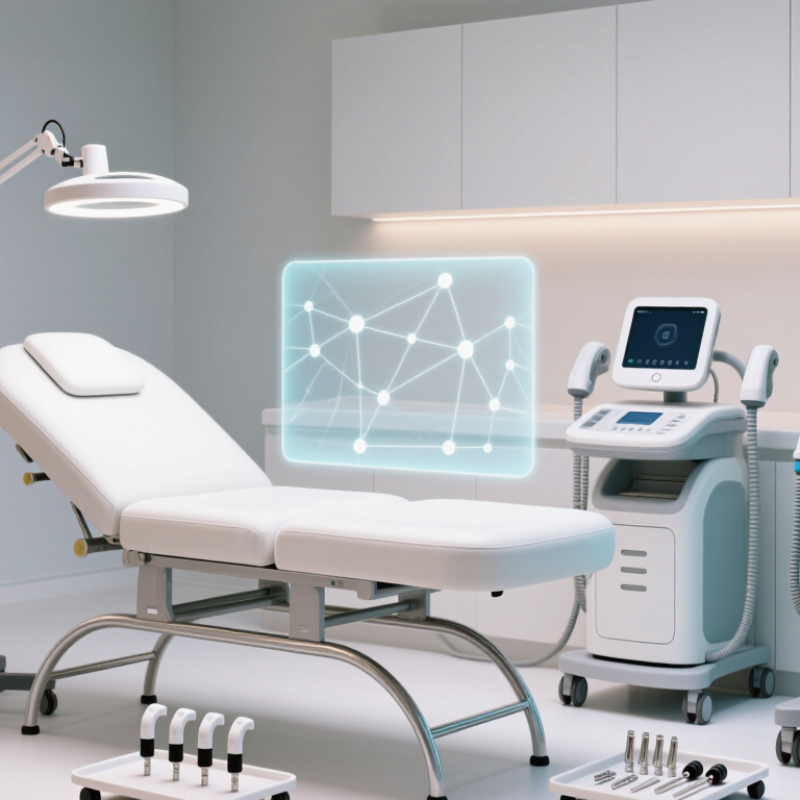
Professional beauty equipment includes treatment beds, facial steamers, magnifying lamps, salon chairs, dryers, and tools for cleaning and sanitation. These assets shape how practitioners work: a stable bed supports precise treatments, while adjustable lighting helps reveal skin details. Equipment is not decoration. It affects comfort, workflow, and the consistency of services, but it cannot replace sound training or careful consultation.
The International Spa Association’s 2024 U.S. Spa Industry Study reported 183 million spa visits and $21.3 billion in spa revenue during 2023. These figures show the scale of professional services, not equipment sales. That distinction matters. Demand alone does not prove that a particular device improves results. In practice, reliable equipment should suit the treatment, fit the room, and be straightforward to clean and maintain. A costly device can still be a poor choice if staff rarely use it.
Tips: Check stability, adjustable settings, cleaning instructions, and service support before buying. Ask staff to test the equipment during a normal workday. Record maintenance needs, too. It is easy to overlook them.
| Equipment category | How it works | Current professional role | Likely development priorities | Practical considerations |
|---|---|---|---|---|
| Treatment beds and chairs | Provide adjustable support and positioning for clients during services. | Used in facial, body, waxing, and other salon or spa treatments to support practitioner access and client comfort. | More ergonomic adjustment, durable upholstery, and designs that simplify cleaning and room setup. | Check weight capacity, stability, adjustability, cleanability, and accessibility for the intended services. |
| Magnifying lamps and task lighting | Combine focused illumination with magnification to make close-up work easier to see. | Support skin observation and precision work in facial and beauty services. | Efficient lighting, adjustable color and brightness, glare reduction, and flexible positioning. | Lighting can aid observation but does not replace appropriate training or clinical assessment. |
| Facial steamers | Produce warm water vapor directed toward the face. | Used as an optional preparation step in some facial services. | Improved temperature control, easier maintenance, and features that help prevent unintended exposure. | Use according to the manufacturer’s instructions; assess client comfort and suitability before treatment. |
| LED light therapy devices | Deliver light at specified wavelengths and intensities; device characteristics vary by model. | Used in some professional skin-care services, with protocols depending on the device and its intended use. | Clearer output specifications, treatment guidance, eye-safety measures, and better documentation of use. | Follow the device instructions, including eye protection and screening guidance. Results and permitted claims depend on the device and jurisdiction. |
| Radiofrequency devices | Use radiofrequency energy to generate controlled heating in targeted tissue. | Offered in some professional aesthetic settings under device-specific protocols and applicable local rules. | More precise energy control, temperature monitoring, and safeguards against excessive exposure. | Training, client screening, device instructions, and local scope-of-practice requirements are important. |
| Microcurrent devices | Deliver low-level electrical currents through contact electrodes. | Used in some facial services as a device-based cosmetic treatment. | Improved electrode contact, adjustable settings, and clearer guidance for contraindications and use. | Follow the manufacturer’s instructions and screen clients for conditions or situations identified in the device guidance. |
| Ultrasonic skin-care devices | Use high-frequency mechanical vibrations; functions and outputs differ across devices. | Used for selected cosmetic skin-care procedures, depending on the equipment and practitioner training. | Better-defined operating parameters, easier cleaning, and more transparent instructions on suitable use. | Use only for the intended purpose and follow hygiene, training, and manufacturer requirements. |
| IPL and laser systems | Use intense pulsed light or laser energy; these are distinct technologies with different operating characteristics. | Used for selected aesthetic procedures in settings where the equipment, practitioner, and service meet applicable requirements. | More robust safety interlocks, controlled access, treatment records, and clear operator guidance. | These systems can present significant risks. Training, eye protection, client screening, and local licensing or scope rules must be checked. |
| Sterilization and sanitation equipment | Supports cleaning, disinfection, or sterilization processes appropriate to the item and procedure. | Helps maintain hygiene between clients and manage reusable tools in professional settings. | Clearer cycle monitoring, traceable maintenance, and workflows that distinguish cleaning, disinfection, and sterilization. | Choose processes based on the item, its instructions, and applicable health requirements; these terms are not interchangeable. |
| Cross-industry outlook | ||||
| Connected and data-enabled systems | May include digital controls, service reminders, usage logs, or software-supported settings. | Can help practitioners operate equipment consistently and keep maintenance records. | Greater attention to data privacy, secure software updates, interoperability, and useful rather than excessive automation. | Digital features do not replace operator judgment, training, or the equipment’s instructions for use. |
| Sustainability and lifecycle | Relates to energy use, repairability, replaceable parts, consumables, and end-of-life handling. | Affects operating costs, equipment availability, and the environmental footprint of a practice. | Longer service life, repairable designs, efficient operation, and responsible materials management are potential priorities. | Compare maintenance needs, consumables, warranties, and disposal requirements alongside purchase price. |
It includes treatment beds, facial steamers, magnifying lamps, salon chairs, dryers, and sanitation tools. Equipment affects comfort and workflow, but cannot replace training.
Match it to the treatments, room size, cleaning needs, and staff routines. Test stability and adjustable settings during a normal workday. Check maintenance and service support, too.
No. Industry growth shows demand, not how well one device performs. Local bookings and reliable evidence matter more.
Long warm-ups and frequent repairs can disrupt appointments and reduce margins. Ask about repair access, energy use, and consumable costs. Plans can miss things.
Look for damaged cables, stable handpieces, clean contact surfaces, and clear instructions. Staff should know when to pause a treatment. Small details matter.
No. A polished screen cannot replace training, sound judgment, or checking local requirements. A checklist helps, but it is not enough.
Flexible training, clear servicing information, and straightforward maintenance can reduce barriers. Frequent upgrades may not fit every clinic’s budget or schedule. That gap remains.
Ask who benefits, who carries the risks, and whether claimed results have reliable support. Some features look useful, yet may rarely be used. Worth a second look.
Professional beauty equipment includes the devices and tools used by trained practitioners to support skin care, hair removal, body treatments, and other non-invasive services. Its role is expanding as clients seek more personalized experiences and businesses look for reliable, efficient ways to deliver consistent care. To understand what is the future of professional beauty equipment, it helps to consider forces such as changing client expectations, advances in technology, and the growing importance of responsible practice.
Future systems may combine connected devices, treatment data, and adaptable settings to help practitioners tailor services while monitoring performance. Equipment design is likely to prioritize ease of use, comfort, energy efficiency, and straightforward maintenance. Treatments may become more integrated and personalized, but innovation must go hand in hand with clear safety guidance, appropriate training, and responsible oversight. Wider access to professional-grade services will also depend on affordability and availability. Overall, the industry’s direction will be shaped not only by new capabilities, but by how safely and thoughtfully they serve both practitioners and clients.

 Nova Beauty